
SFUSD
How can schoolyards facilitate learning, play, and joy and serve as vital civic infrastructure?
San Francisco Unified School District (SFUSD) Schoolyard Comprehensive Plan
In collaboration with San Francisco Unified School District (SFUSD), Berliner Architects and KPFF Engineers, SITELAB developed a Schoolyard Comprehensive Plan (SCP), a visioning document that addresses the District’s goals to create dynamic schoolyards that support learning, play, and environmental stewardship while contributing to the city’s vision for resilient and inclusive public spaces. SFUSD is the third-largest landowner in the city, but schoolyards are often dominated by hardscape and considered an afterthought. The SCP reframes the schoolyard as essential civic and educational infrastructure while ensuring these assets meet the unique needs of the city’s diverse student populations and the District’s many departments (physical education, athletics, and maintenance) while integrating into adjacent community fabric.
A Framework for Action
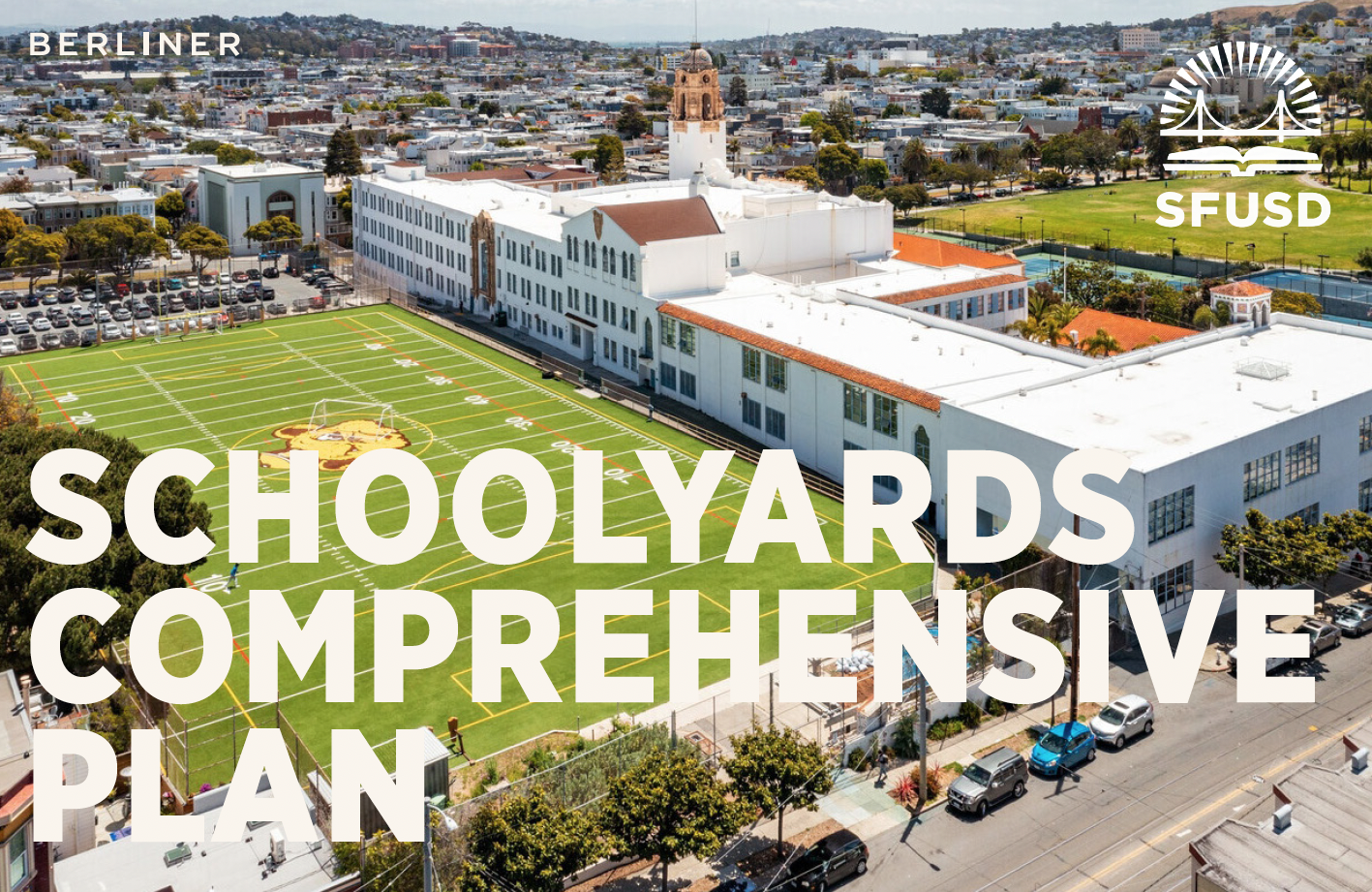
The Schoolyard Comprehensive Plan is more than a design guide; it is an empowerment toolkit designed to move the District away from one-off projects and towards systemic transformation. The process was informed by extensive community engagement, including workshops with diverse SFUSD stakeholders, non-profit partners, and city agencies, which resulted in a common set of guiding principles and design priorities. The plan’s framework includes a menu of adaptable design tools that individual schools can customize, such as:
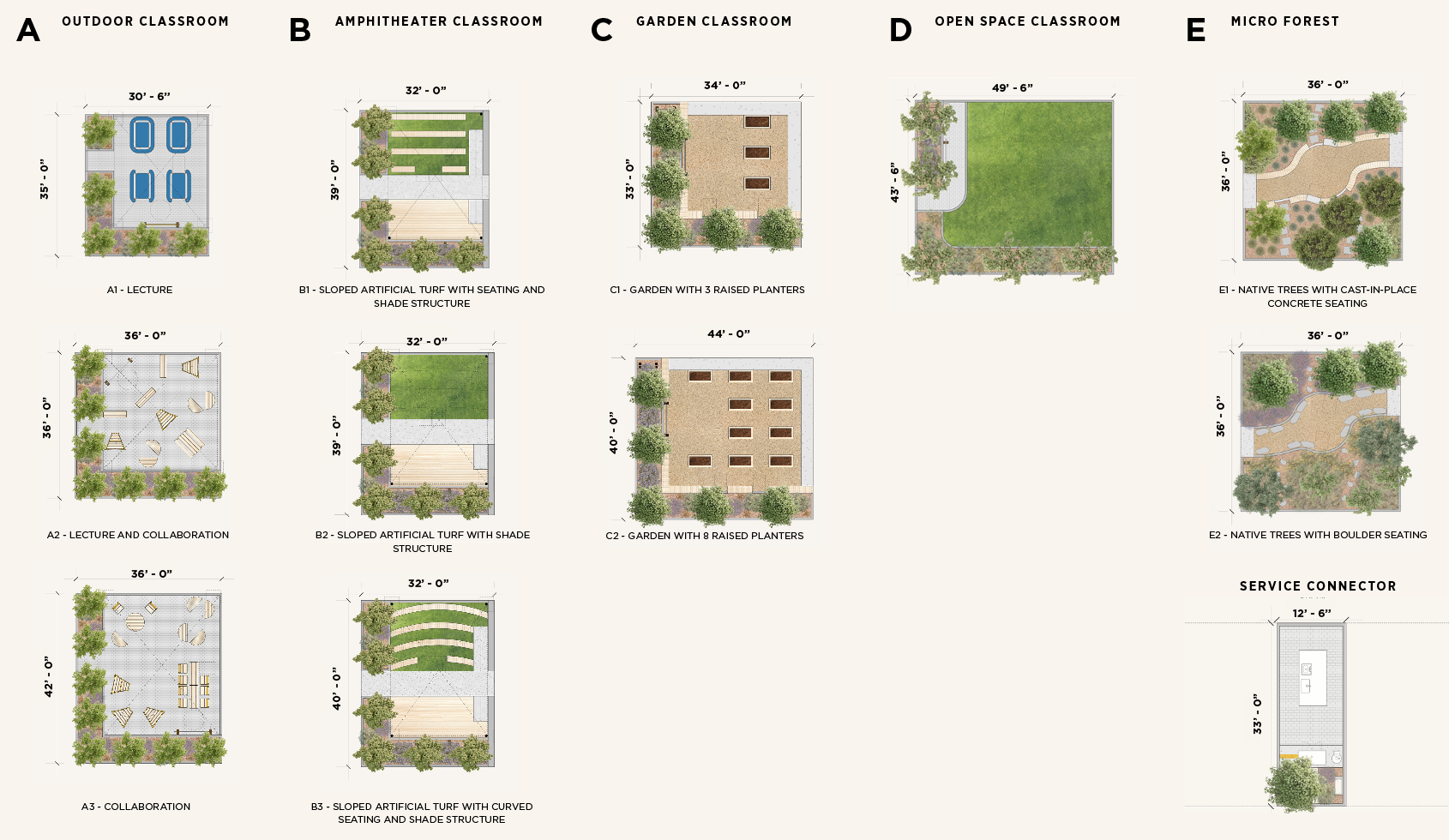
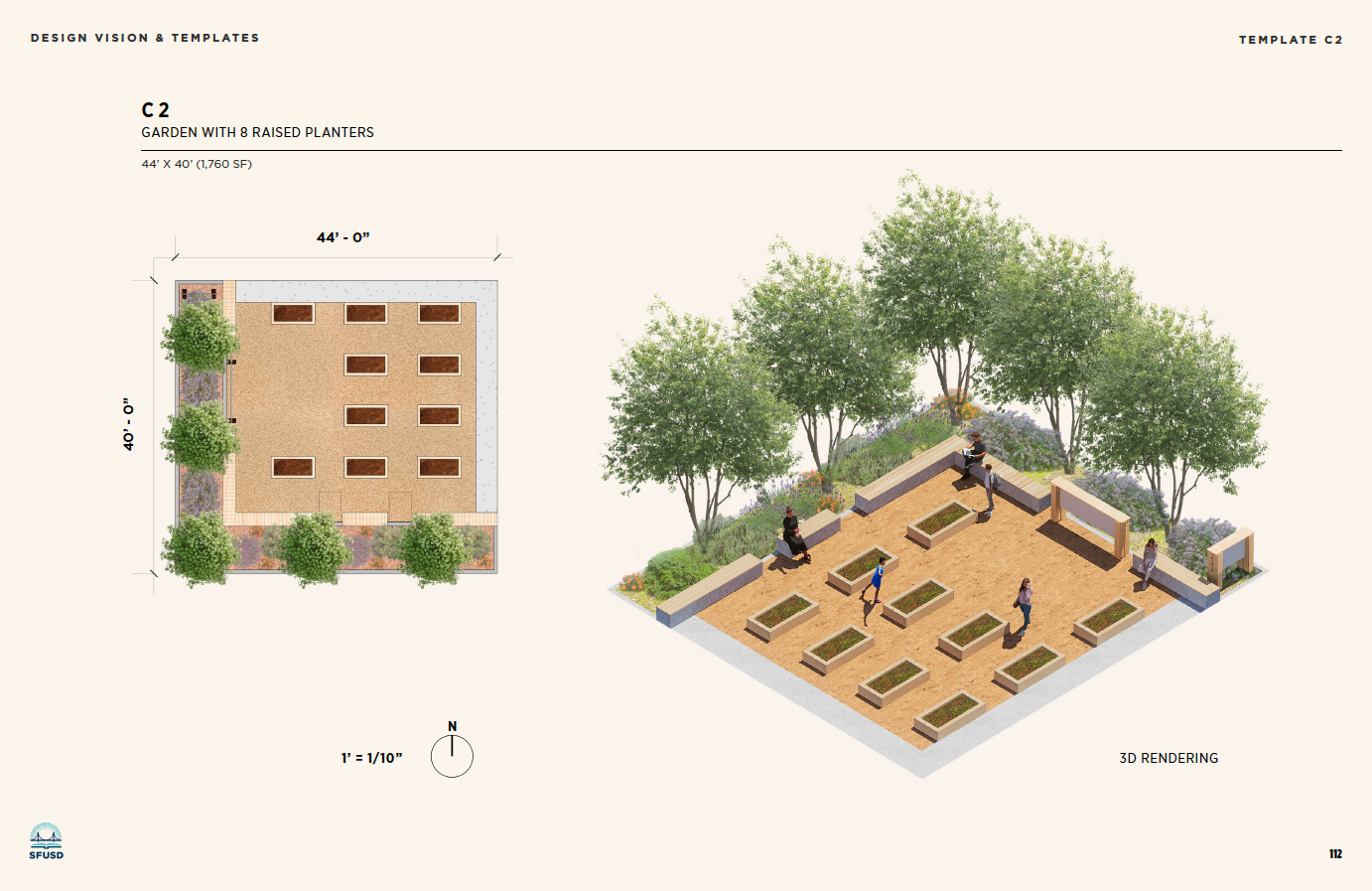
Five Outdoor Learning Templates: These templates support different classroom and gathering typologies, providing flexible options for small and large groups, hands-on experiential learning, and connection with nature.
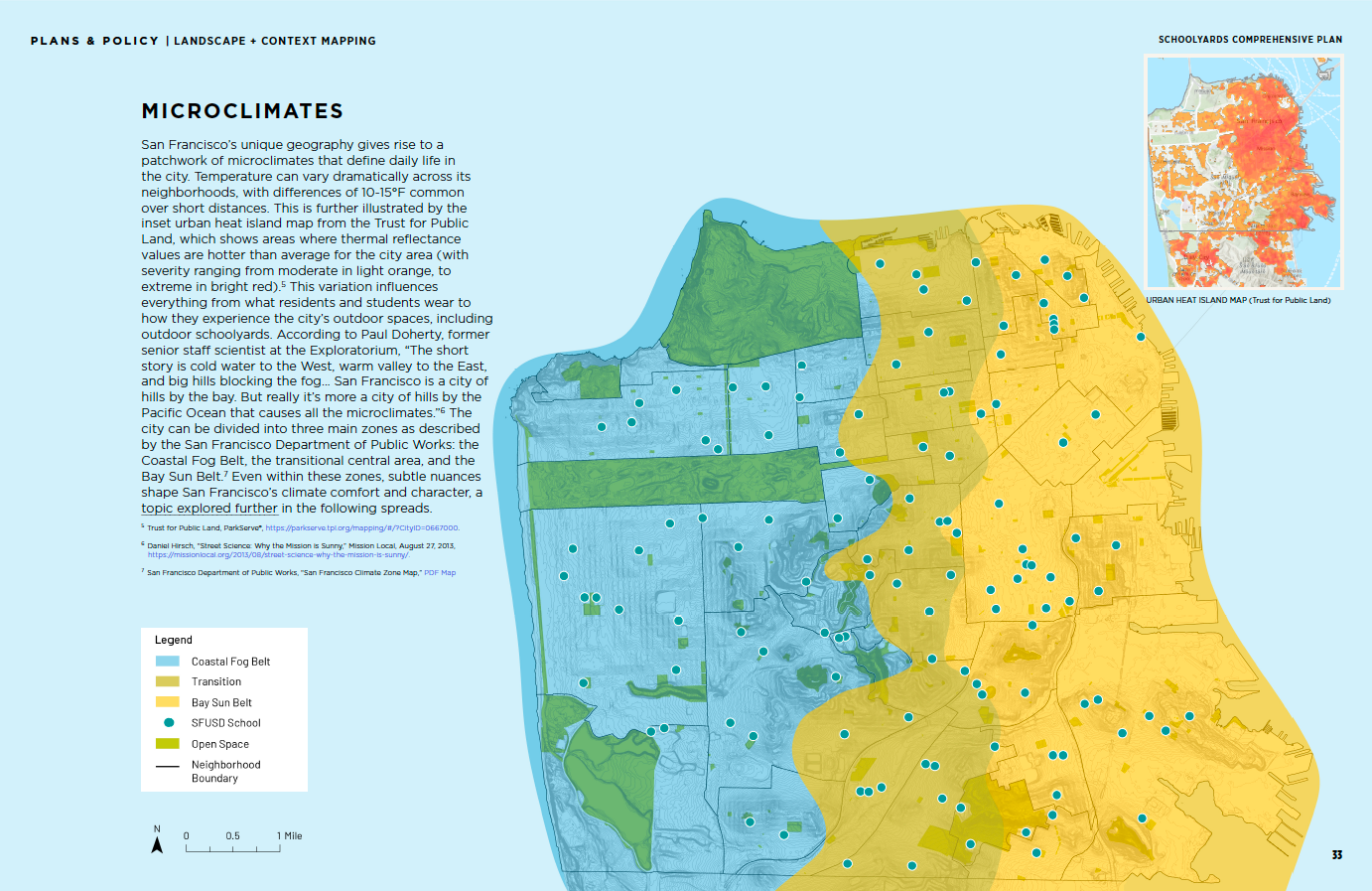
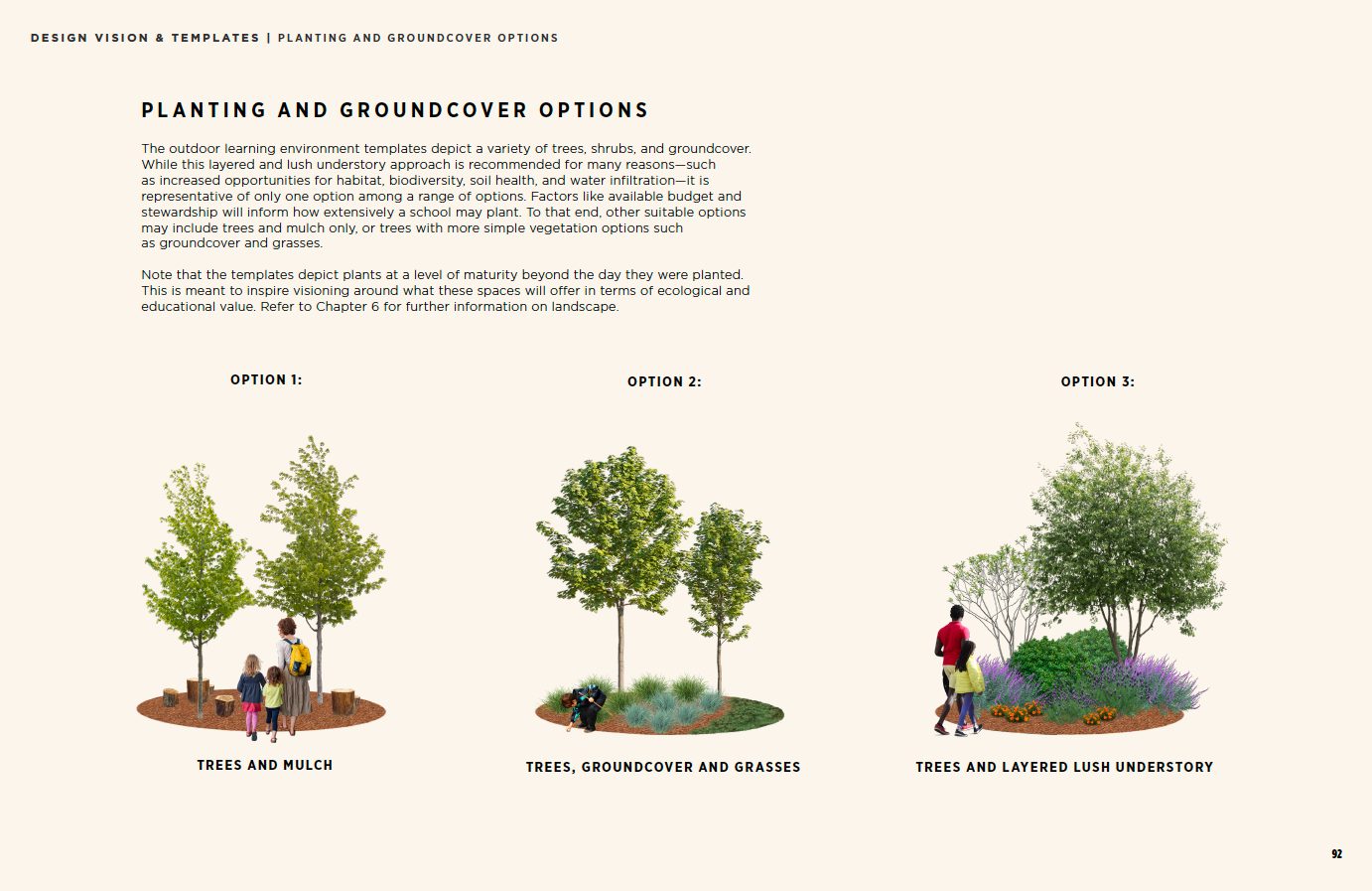
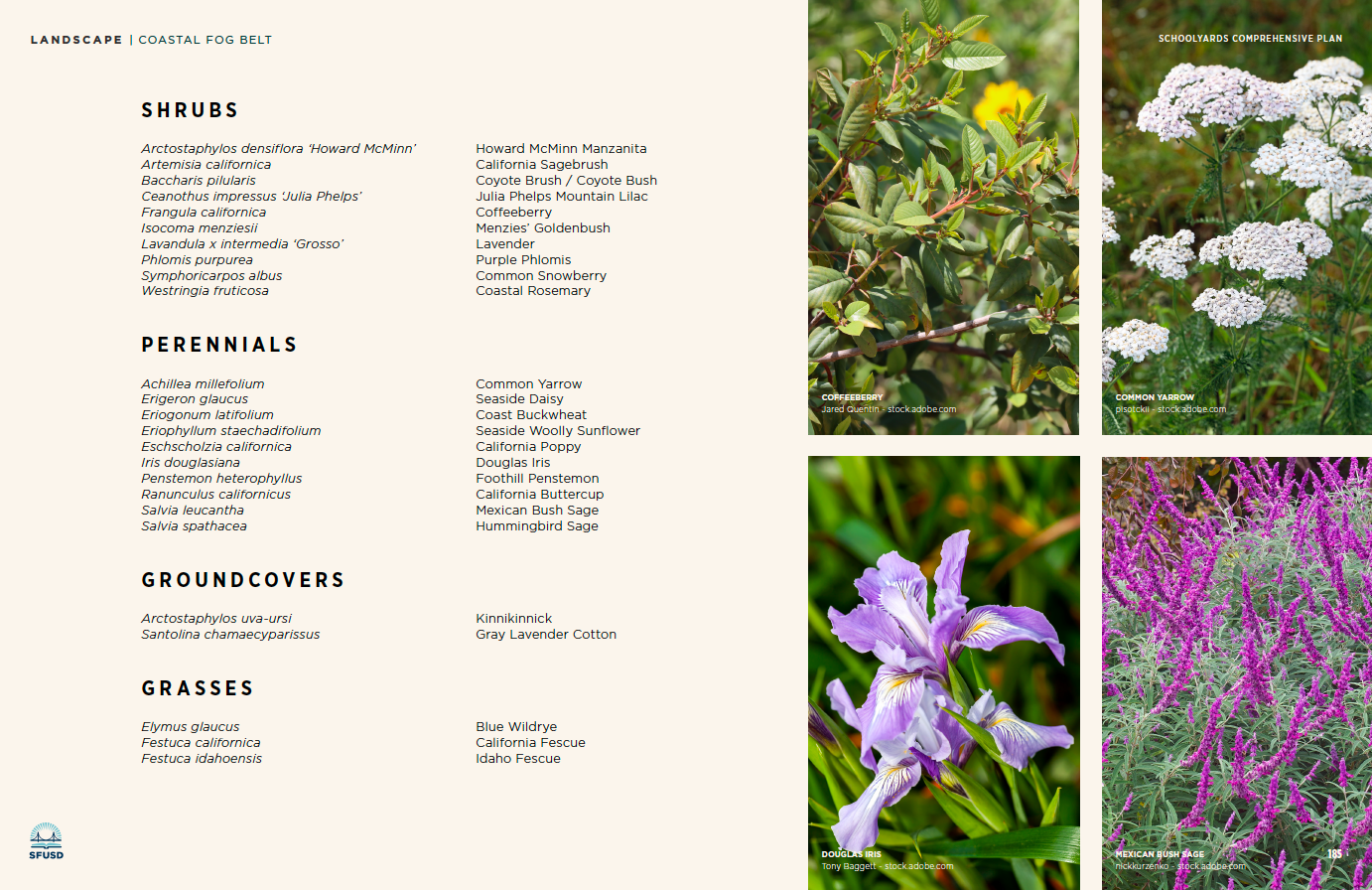
Climate-Resilient Design: Design concepts are rooted in nature-based play, stormwater strategies, and attention to trees and shade in order to enhance comfort and environmental performance. The landscape and planting strategy features drought tolerant, low maintenance, and robust species aligned with San Francisco’s microclimates, including many San Francisco/California native and climate-resilient species that support continuity with local plant communities.
Designing for All: Recognizing the need to move beyond spaces designed narrowly for ball sports, the plan emphasizes designing for neurodiversity, accessibility, and a wide range of social engagement. This inclusive approach ensures spaces that simultaneously support the quiet observer, small groups, and active athletes.
Location / Date:
San Francisco, CA / 2024-2025
Status:
Completed
Site Area:
130+ Schoolyards
Client:
San Francisco Unified School District
Design Collaborators:
Berliner Architects, KPFF Engineers
Project Website:
SFUSD Schoolyard Project

Equity and Impact
A key, innovative component of the SCP is its focus on feasibility and equitable implementation. Schoolyards are a universal experience, spanning race, gender identity, political identity. SITELAB collaborated with the District to develop High-Level Prioritization Criteria. These clear, data-driven metrics ensure that resources from measures like the SFUSD bond funding are strategically focused on the most vulnerable communities.This equitable framework is vital to securing consensus and communicating to the broader public and city partners why this work is essential, not just a beneficial amenity. By providing a guide for igniting curiosity, fostering belonging, and creating multi-use, climate-resilient assets, the SFUSD Schoolyard Comprehensive Plan serves as a powerful model for how school districts nationwide can utilize their vast land holdings to deliver scalable solutions for health, climate adaptation, learning, and community.
Following the completion of the SCP, SITELAB, Berliner Architects and KPFF Engineers were selected to implement the plan at Cesar Chavez Elementary School in the Mission Neighborhood of San Francisco. Currently, SITELAB is leading the landscape design and building upon the planting strategy outlined in the SCP, with goals of transforming a majority asphalt campus into a thriving learning landscape.